
Advanced Technology for Manufacturing High-Performance Composite Textile Yarns
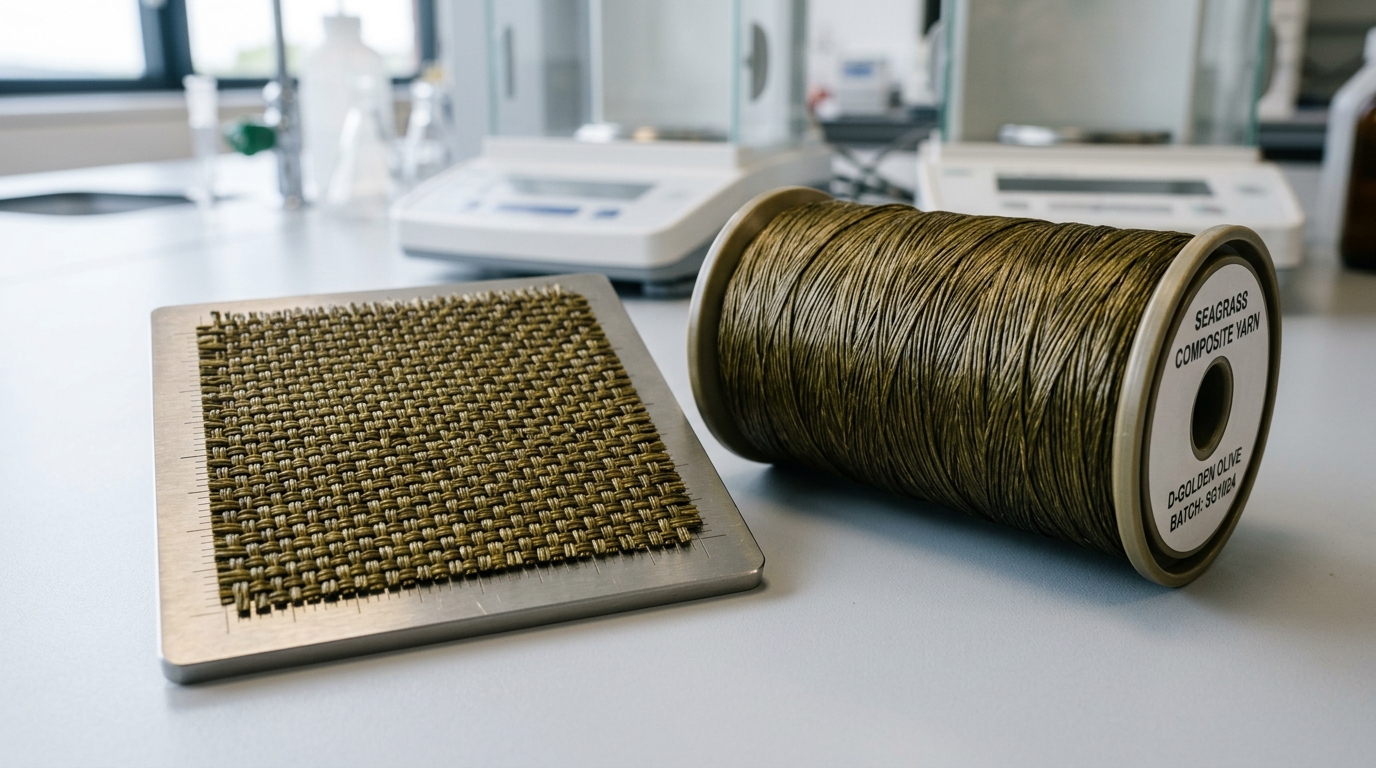
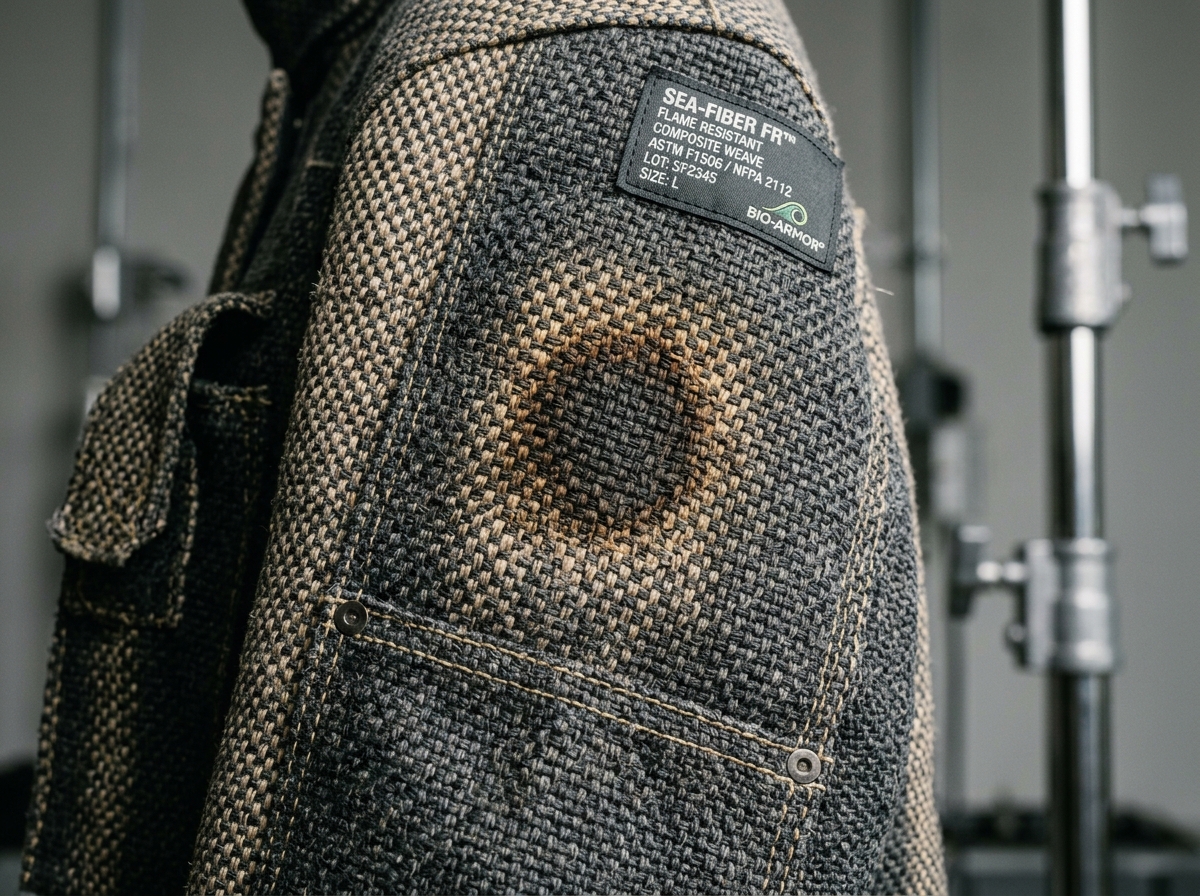
An eco-friendly manufacturing process produces ultra-fine, high-durability composite yarns derived from processed Posidonia oceanica seagrass waste. This fully bio-based technical textile features inherent flame resistance and antimicrobial properties, eliminating the need for toxic synthetic additives or aramid fibers (such as Kevlar and Nomex).
It offers an environmentally sustainable solution for personal protective equipment (PPE) and high-performance textiles designed for harsh environments.
From Natural Seagrass Residues to Technical Safety Textiles
Commercial Availability, Pricing & Professional Evaluations
Procurement terms for industrial weavers, PPE garment manufacturers, and material laboratories.
Posidonia Bio-Composite High-Performance Yarn Sample Spool
Industrial qualification sample spool (fine counts 15 to 30 Tex) for weaving and knitting trials · Full B2B billing · Bulk continuous yardage dispatch for certified safety wear manufacturers.
« Exceptional fire retardancy without chemical additives. The limiting oxygen index of 32.5% and rapid self-extinction provide an authentic eco-alternative to petroleum-based Kevlar and Nomex. »
« Superb fine spinning down to 15 Tex and long-lasting antimicrobial action surviving over 50 industrial wash cycles. A game changer for hazardous environment PPE. »
Eliminating Toxic Chemical Retardants & Petroleum Aramids
Commercial flame-resistant apparel relies heavily on halogenated retardant finishes or synthetic petroleum aramids (Kevlar® and Nomex®). Their production produces harsh acidic waste, and their shedding fibers persist forever as harmful microplastics.
EMTAT's technological breakthrough harnesses the biomineralized cellular architecture of Posidonia oceanica. The natural synergy between amorphous silica and refractory lignin forms an instant vitrified shield when exposed to flame, self-extinguishing immediately without toxic off-gassing or molten droplets.
Key Benchmark Parameters for Hostile Conditions:
-
•
Inherent Fire Resistance: Limiting Oxygen Index (LOI ≥ 32.5%) without any chemical additives; zero flaming drip.
-
•
Durable Antimicrobial Efficacy: Marine flavonoids resist 50+ high-temp washings (> 99.8% bacterial reduction).
-
•
Ultra-Fine Spinning: Spun down to 15 Tex, producing pliable, breathable, and ergonomic protective garments.
-
•
Zero Toxic Microplastics: 100% biodegradable and compostable at end-of-life cycle.
Detailed Information About the Innovation
Dedicated space for patent claims, wet-spinning chemical parameters, and fiber engineering specifications.
Add Custom Data or Innovation Claims to this Box:
Performance Comparison Against Conventional Aramid Fibers
| Material Class | Flame Mechanism | Antimicrobial Action | End of Life & Microplastics | Life Cycle Carbon Impact |
|---|---|---|---|---|
| Kevlar® (Para-Aramid) | Synthetic aromatic polymer | Requires chemical biocide finish | Non-biodegradable; persistent | +12.4 kg CO₂e / kg |
| Nomex® (Meta-Aramid) | Petrochemical aromatic chain | Zero natural action | Persistent microfibers | +10.8 kg CO₂e / kg |
| EMTAT Bio-Composite Yarn | Natural marine silica & lignin vitrification | Inherent broad-spectrum bio-phenols | 100% Compostable; zero microplastics | -1.8 kg CO₂e / kg (Negative) |