
Eco-friendly Filtration Cartridges by EMTAT
High-porosity activated carbon, with properties enhanced through the recycling and utilization of accumulated natural marine waste from the Posidonia oceanica plant. This high-efficiency activated carbon is integrated into industrial respirator filter cartridges to capture pollutants with superior effectiveness.
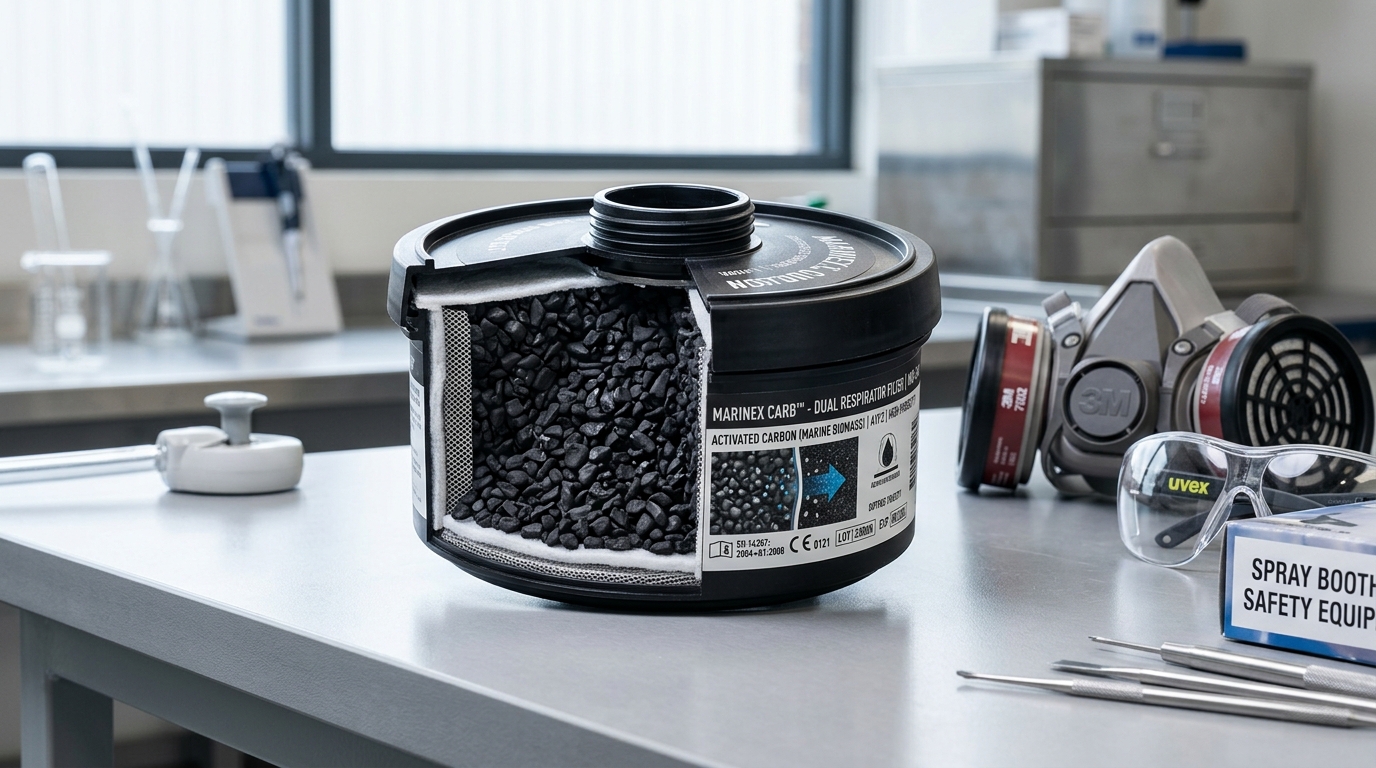
Specifically Developed for Heavy Chemical Emissions
These cartridges were specifically developed to withstand harsh industrial environments characterized by high chemical emissions, primarily:
For capturing heavy solvent vapors, polyurethane lacquer aerosols, and high-velocity overspray mist generated during continuous automotive finishing lines.
Adsorbs toxic volatile organic compounds (VOCs)—such as toluene, xylene, benzene, and aliphatic esters—providing 100% protection for human respiratory health.
Commercial Availability, Pricing & Professional Evaluations
Certified data for occupational health procurement and plant safety directors.
Marine Biomass Activated Carbon Respirator Filter Cartridge
Industrial qualification trial pack · Universal bayonet fitting · B2B invoice · Custom tiered pricing available for automotive body shop chains and chemical processing facilities.
« Extensively tested in continuous industrial automotive spray booths. Unprecedented solvent vapor and VOC adsorption efficiency with low breathing resistance for operators. »
« Exemplary zero-carbon alternative to traditional bituminous coal filters. Breakthrough test times for toluene and xylene confirm over 20% longer operational service life. »
A Green Alternative: Solving the Limitations of Previous Technologies
The EMTAT technology overcomes the environmental and logistical hurdles faced by conventional filters on the market today:
Traditional filters rely on bituminous coal, which leaves a massive carbon footprint; in contrast, our innovation achieves a zero-carbon profile and relies entirely on renewable biomass.
Instead of consuming vast tracts of farmland and incurring huge shipping costs to import coconut shells, we utilize discarded marine waste found on beaches to achieve resilient local and global sustainability.
« The future of occupational safety begins with protecting nature—and is dedicated to nature. »Founding Philosophy of EMTAT LTD · London, United Kingdom
Adsorption Spectrum of Target Toxic Compounds
Select a solvent compound to inspect the capture performance of Posidonia marine activated carbon:
Toluene (Methylbenzene) · C₇H₈
Industrial Sources: Automotive spray lacquer thinners, synthetic resins, industrial adhesives.
Bimodal micro- and mesopore distribution matches the kinetic diameter of toluene (0.58 nm) precisely.
Feedstock Origin and Environmental Profile
| Activated Carbon Feedstock | Carbon Footprint | Agricultural Land Impact | Logistics & Supply Resilience | VOC Respiratory Protection |
|---|---|---|---|---|
| Standard Bituminous Coal | Massive fossil footprint (Heavy open-cast mining) | Severe landscape & soil degradation | Vulnerable to carbon taxation and geopolitical shocks | Standard baseline |
| Imported Coconut Shells | Moderate (Heavy bunker fuel transoceanic freight) | Consumes thousands of hectares of tropical plantations | High shipping freight rates; seasonal weather delays | Good microporosity |
| EMTAT Marine Biomass | Net-zero carbon profile (100% renewable coastal biomass) | Zero farmland; active coastal beach remediation | Resilient circular local & global supply model | 100% human health protection |